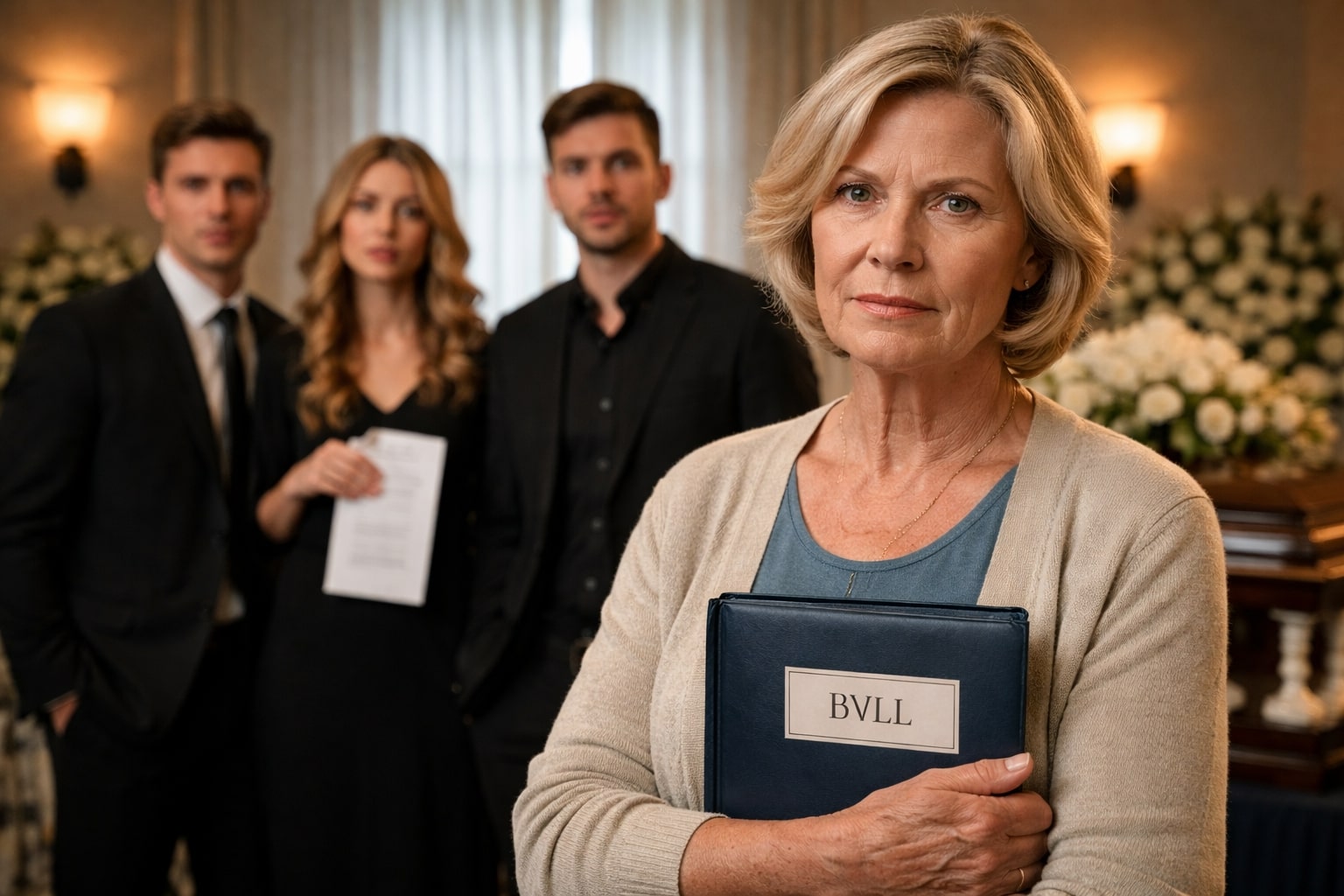
Margaret could have walked away when her husband died—but she didn’t. She stayed and raised his three kids as if they were her own.
She met her husband when she was 38. He already had three children (10, 12, and 14). They were married a little over a year before he passed away unexpectedly. With no biological kids of her own, Margaret poured everything into those children—school expenses, braces, camps, graduations, first cars, down payments, all of it. She never raised them expecting repayment… but she also never imagined how they’d treat her when she needed them most.
Twenty-five years later, Margaret’s health started failing. Doctors told her she had a serious heart condition and would eventually need surgery. But instead of showing up, the “kids” mostly stayed away—until inheritance came up. Suddenly they became attentive: phone calls, surprise visits, small gifts, sweet words. Margaret wanted to believe it was love.
Then one night, she overheard them talking in her living room like she wasn’t even a person. They were casually discussing her “final arrangements”—a cemetery plot, a headstone—and worse, dividing up her things in advance: the house, the savings, the jewelry. Listening to them negotiate her life like a checklist made her feel physically sick.
What they didn’t realize was that Margaret had quietly kept a close bond with her late husband’s brother, Peter—known to them as “Uncle Peter”—who happened to be a top cardiac surgeon. When Margaret told him what was happening, he stepped in and arranged her surgery without charging her.
Margaret made a decision: she wouldn’t tell her stepchildren a thing. She let them keep performing—playing the caring family, hinting about “making peace,” and positioning themselves for the estate. Meanwhile, she prepared her own plan.
With Peter’s help, Margaret staged a dramatic wake-up call for them. The paperwork and arrangements moved forward as if she were gone, and the funeral was set. Her stepchildren arrived dressed in black, acting heartbroken—while, in Margaret’s mind, they were already counting what they’d sell first.
Then the doors opened.
Margaret appeared—very much alive—wheeled in, calm and steady. The shock on their faces said everything. She didn’t scream or cause a scene. She simply told the truth: she reminded them that when others could have left, she stayed. She gave them a family, a home, and a future—only for them to treat her like a bank account with a closing date.
Then she revealed her real final move: an updated will. Not a cent would go to them. She left everything to a children’s shelter—kids who truly understood what it meant to grow up without love and stability, and who wouldn’t take it for granted.
The fallout was immediate. The story spread, and her stepchildren became “famous” in the worst way possible. As for Margaret, she recovered, reclaimed her peace, and walked away feeling free—hoping they learned the lesson she’d been trying to teach all along: you don’t measure people by what you can get from them, especially not the ones who sacrificed everything for you.