My name is Margaret, and never in my life did I imagine things would turn out this way. I wasn’t known as a particularly strong person. I spent most of my life as a quiet school librarian, happiest in routine. Every Friday I baked blueberry muffins, and every baby born in our church got one of my knitted blankets. Life was simple and steady—until it wasn’t.
At 42, cancer took my husband. The only thing that kept me going was my daughter, Anna. She had her father’s smile and my stubbornness. By 27, she had built a career in marketing, a cozy home just down the street, and a sweet little boy—my grandson, Ethan. She always told me not to worry, that Ethan would grow up just fine. But no mother can ever prepare for what happened next.
I was 53 when the phone rang. A plane crash. Bad weather. No survivors. Just hours earlier Anna had been laughing, telling me something funny Ethan said at preschool. And then—she was gone. I collapsed to the kitchen floor, the coffee mug shattering in my hand. I didn’t even feel the glass cutting me. All I could do was whisper her name over and over, as if that could undo the truth. Ethan was only three. Too little to understand, but he clung to me, sensing everything had changed. Every night I told him stories about his mother—her love, her kindness, her strength.
But grief wasn’t done with us. Just weeks after the funeral, Ethan’s father, Mark, showed up at the door. He placed a suitcase by his feet and, without emotion, said, “I can’t do this. You take Ethan. You’ll manage.” He’d met someone new. He wanted a fresh start. And with that, he left. No hug. No goodbye. Nothing. I pulled Ethan into my arms and whispered, “It’s just you and me now.” And it was.
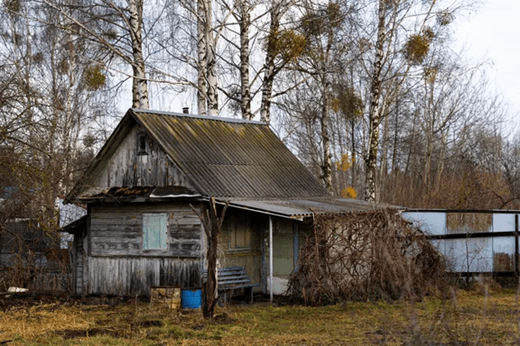
We stayed in Anna’s little house. It was old and drafty, the floors always needing mopping, the yard always needing trimming, but it was filled with her memory. Money was tight, so I worked nights cleaning medical offices and weekends at the bakery. My body ached, but Ethan’s smile kept me alive. He never asked about his father. By the time he turned six, Mark’s name never passed his lips again.
Ethan grew into a remarkable young man—thoughtful, kind, and strong. At 25, he handed me a folder. “This house is ours now,” he said. “You’ve taken care of me long enough. Let me take care of you.” He bought us a new place—bright, comfortable, with a little balcony just for me. For the first time in decades, I let myself exhale.
But we never sold Anna’s old house. It sat neglected, until one day, the phone rang again. Our neighbor told me, “Margaret… he’s back. Mark is standing outside the old house.”
Two days later, his rusty car rolled into our driveway. Gray-haired, thin, in worn clothes, yet still carrying an air of entitlement. “You’ve done well, son,” he said to Ethan. Then he pulled out papers. A property transfer. “That old house is half mine. I want it back.”
Ethan’s jaw tightened. “That house isn’t property—it’s where Grandma raised me. You left. You don’t get to walk back in.” Mark’s response? “You owe me. I gave you life.” Ethan didn’t waver. “And she gave me everything else. You’re a stranger to me now.” He handed the envelope back. “You don’t belong here.”
Later, I told Ethan something I’d never shared: the house had been bought entirely by Anna, with her savings. Mark never contributed a cent. Ethan smiled. “Then we’ll restore it. Not to sell, but to honor her.”
So we did. And when Mark came back again, he didn’t knock. He just sat in his car, stared at what could’ve been his, and drove away. I didn’t feel anger—only pity.
Because in the end, family isn’t defined by blood or paper. It’s defined by who stays. And for us, it was always Ethan and me. From the very beginning.