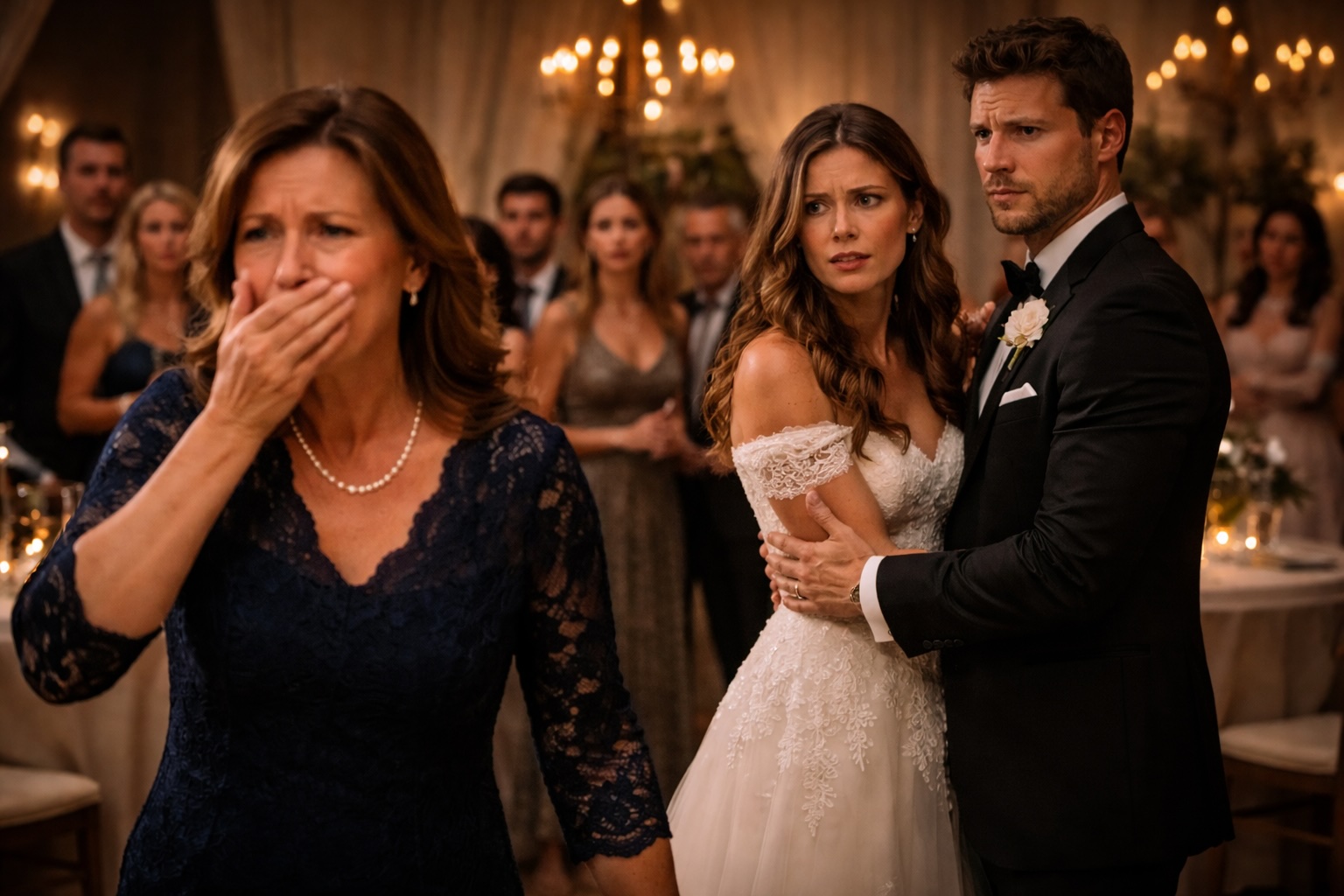
Planning the wedding was hard enough, but my future mother-in-law made it even harder. She never had to scream or start a fight to make her feelings known—she was more subtle than that. Backhanded compliments. Raised eyebrows. Little “jokes” that weren’t really jokes. She made it clear, in a quiet and calculated way, that she didn’t think I was good enough for her son.
Still, I kept telling myself maybe she’d soften once the big day came. Maybe seeing her son marry someone he loved would finally change something.
For a moment, it even looked like it might.
I had put so much thought into my vows. I wasn’t trying to sound poetic—I just wanted to be honest. I spoke about how we’d grown together, how we’d made it through hard seasons, and how he had made me feel safe in a way I’d never felt before.
At the end, I said something deeply personal—words we’d shared privately during our toughest moments:
“I love every part of you… even the broken pieces.”
I wasn’t expecting applause. I just wanted him to know I meant it.
But before the moment could even settle, my MIL’s voice sliced through the silence.
Loud. Sharp. On purpose.
“He wasn’t broken before you.”
The room went completely still. Heads turned. A few people gasped. Others stared at their plates like they suddenly became fascinating. I felt my face go cold, but I forced a smile and kept going. I finished my vows like nothing happened because I refused to give her the satisfaction of stealing that moment from me—no matter how much it hurt inside.
I thought that was the worst of it.
I was wrong.
During the reception, in the middle of the room, she suddenly shouted, “I AM your mother!” Then she launched into dramatic sobs—real theatrical crying—before storming out in front of everyone. It was humiliating and confusing, and I had no idea what had happened to set her off.
Later, my husband told me the truth.
Right after the ceremony, he had pulled her aside and calmly told her what she said during my vows was disrespectful and completely out of line. Then he made something even clearer: if she ever treated me like that again, there would be consequences. If she couldn’t respect me, she wouldn’t have a place in our lives.
That’s what triggered her meltdown. Not me. Not the vows. Not “emotion.”
She lost it because, for once, someone finally told her “no.”
And as painful as the day was, I walked away with something I didn’t even realize I needed that badly: proof that my husband had my back. I didn’t marry into her approval. I married into something real—someone who chose me, loudly and clearly, in front of everyone.