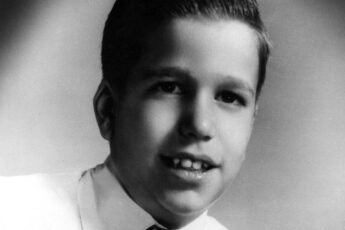
He had the smoldering eyes, the dangerous charm, and the kind of magnetic screen presence that made audiences sit up when he walked into a frame. In the 1980s.
Eric Roberts was one of Hollywood’s most exciting young actors — a rising star whose early work hinted at a career as great as his looks. But behind the red carpets, bright lights, and golden opportunities.
A painful personal journey was unfolding — one that revolved around love, loss, addiction, and the daughter he walked away from when she was barely seven months old. This is the story of a gifted actor whose life was marked by brilliance and heartbreak, who lost his way and ultimately found a measure of peace and understanding.
It’s a story about fame, fallibility, and what it takes to look back with honesty and reflection,

- From Mississippi to the Heart of Hollywood
- Family, Fatherhood, and the World That Came Crashing In
- Behind the Custody and Family Dynamics
- Emma Roberts: Growing Up in the Spotlight
- Career, Addiction, and Finding His Path Again
- Reflection, Remorse, and Where He Stands Today
- Beyond Family: A Career of Persistence and Passion
- A Legacy Still Being Written
From Mississippi to the Heart of Hollywood
Eric Anthony Roberts was born on April 18, 1956, in Biloxi, Mississippi, into a family that emphasized performance and storytelling. He didn’t take long to start living out those lessons on stage and screen.
After honing his craft in theater and earning acclaim on Broadway — particularly for his work in Burn This — Roberts quickly transitioned to film. His early screen work was nothing short of dazzling.
By the early 1980s, he had earned Golden Globe nominations for movies like King of the Gypsies (1978), Star 80 (1983), and Runaway Train (1985), the last of which also secured him an Academy Award nomination for Best Supporting Actor.
With each performance, his presence became more compelling — intense yet vulnerable, edgy yet deeply human. His talent was undeniable and versatile, and Hollywood took notice.
Roberts’ early success was the sort that many actors spend a lifetime chasing. He was handsome, charismatic, and instantly recognizable — the kind of performer who seemed destined for long-term stardom. Yet the pressures of fame and personal demons would soon change the trajectory of his life in profound ways.
Family, Fatherhood, and the World That Came Crashing In
In 1991, Roberts and his then‑partner Kelly Cunningham welcomed their first and only child together — a daughter they named Emma Roberts.
Emma would grow up to become one of Hollywood’s most recognizable young actresses, known for roles in American Horror Story, Scream Queens, We’re the Millers, and numerous other films and series.

But her earliest years were shaped by circumstances that left a deep emotional mark on the entire family.
In his 2024 memoir Runaway Train: Or the Story of My Life So Far, Eric Roberts reflected candidly on his own struggles after Emma’s birth.
He wrote that while he loved his daughter deeply, he simply wasn’t equipped to be the father she needed at that time. “[The pregnancy] was very exciting,” he recounted.
“I fell madly in love with Emma the first minute I saw her.” Yet, once she arrived, Roberts admitted that he “couldn’t handle the realities of an infant coming into my life,” and that he “couldn’t handle being a parent.”
Roberts also noted that at the time of her birth, he was still deeply embroiled in substance abuse — particularly cocaine — and that this addiction overshadowed his ability to be present for his daughter.
“I was still impossibly coked up when she was born, which explains everything,” he writes, acknowledging that his addiction was a central reason he lost custody of Emma.
He goes further: “The biggest consequence of my drug use was losing Emma,” he later told interviewers, underscoring how his addiction derailed not only his personal life but also the bond between father and daughter.
Roberts later admitted in that memoir, “I had abandoned Kelly when Emma was just seven months old,” acknowledging that he walked away from his young family during a period he now views with regret.
Behind the Custody and Family Dynamics
Contrary to some public speculation, Roberts clarifies in his memoir that there was no dramatic, bitter legal war over custody between him, Cunningham, and his famous younger sister, Julia Roberts.

He stated that he himself never felt capable of seeking primary physical custody of Emma, saying of himself: “I never saw myself as someone who deserved to have physical custody of Emma, not in a million years.”
Roberts also denied the widespread notion that Julia “took sides” against him in a bitter legal battle. In fact, he wrote that Julia — along with their sister Lisa Roberts Gillan — provided financial help for the legal costs associated with establishing custody arrangements, not out of malice but because they wanted him to get his life straightened out. “Thankfully, Julia helped — for Emma’s sake and because she could afford to… I deeply appreciated it,” he wrote.
Despite these clarifications, the custody situation and its impact on family relationships contributed to years of strained interaction between Eric and Julia — though in recent years, the siblings have made some peace.
Emma Roberts: Growing Up in the Spotlight
Emma Roberts — born on February 10, 1991 — was raised primarily by her mother, Kelly Cunningham, and later spent time around her extended family, including visits to sets where her aunt Julia worked.
As a child, she would visit the set of Erin Brockovich, where she once hid in her aunt’s makeup trailer, enjoying the creative energy and environment of filmmaking — a memory she later described fondly.
She began acting at a young age and quickly developed her own career, starring in film and television projects that earned her critical acclaim and a devoted fan base.
But when asked about her relationship with her father, she has responded with guarded honesty. On at least one occasion, she said simply: “Um… how do I say this? No, we’re not [close].” — highlighting the fact that their bond has never truly recovered from the early separation.

Emma has also become a mother herself. She and her former partner Garrett Hedlund share a son, Rhodes, born in 2021, and Emma has publicly engaged with parenthood from her own perspective.
Career, Addiction, and Finding His Path Again
While his personal life faced upheaval, Eric Roberts never stopped working. After a slow period, he rebuilt a prolific career, appearing in hundreds of film and television roles throughout the decades — a testament to his versatility and tireless work ethic.
His credits span blockbusters, indie films, television guest appearances — and even reality shows — giving him one of the most voluminous resumes in Hollywood.
But it was not without consequence. His struggles with addiction and erratic behavior also affected his family relationships and reputation.
In his memoir, he acknowledged how damaging his substance abuse was not only to his role as a father but to his relationships with his siblings, once describing that “there were times when it was dangerous to be around me.”
Despite years of turbulence, Roberts eventually sought help. A critical turning point came in the early 1990s when his then‑wife Eliza, whom he married in 1992, helped push him into sobriety and rehabilitation.
Court‑mandated treatment played a role too, and by focusing on recovery, Roberts began to rebuild his life personally and professionally.
In recent years, he has spoken openly about his recovery and how it has shaped his approach to life. In interviews, he has referred to himself as a recovering addict, willing to take responsibility for past hurt and grateful for the support of those closest to him.

Reflection, Remorse, and Where He Stands Today
Now in his late 60s, Roberts’ perspective on his past — particularly his role as a father — is one marked by reflection rather than denial. He has acknowledged openly that his drug addiction cost him dearly, especially in terms of his relationship with Emma.
“I loved my little daughter with the strength of Hercules, despite my own weaknesses,” he wrote in his memoir. But he conceded that he “couldn’t handle being a parent” at that point in his life.
Roberts also recognizes the strength and resilience his daughter has shown — qualities he believes have helped her navigate the pressures of Hollywood more successfully than he did in his youth.
He has expressed pride in her achievements and confidence in her ability to thrive, noting that she has tools today that he didn’t have at her age.
While their relationship remains distant, he has also publicly shared moments of affection, including occasional posts celebrating her birthdays and accomplishments. These gestures reflect a father who is aware of what he missed, even as he respects the life his daughter has built.
Beyond Family: A Career of Persistence and Passion
Eric Roberts’ life story is not just about loss and regret. It’s also about resilience. After decades in Hollywood — including periods of personal struggle — he continues to work regularly, appearing in major films, television series, and independent projects. His presence on screen remains compelling, a raw reminder of the talent that first captured attention decades ago.
In many ways, Roberts embodies the complicated reality of Hollywood — where immense talent can exist alongside deep personal fault lines, and where fame’s bright lights can illuminate not just success but vulnerability.
In his memoir and in interviews, he speaks not from a place of excuses but of understanding. “I imagine I will remain as Julia’s brother and Emma Roberts’ dad for the rest of my life,” he wrote, adding that he hopes to carry those roles with “pride and grace.”
A Legacy Still Being Written
Eric Roberts is a man who once lost nearly everything — his family, his stability, and at times his own sense of self. But he also found the courage to confront his past, to reflect publicly on his mistakes, and to move forward with humility and purpose.
His career, long and varied, continues to evolve. His personal life, while shaped by early regret, now carries a quieter wisdom.
And though his daughter Emma grew up largely without him, both father and daughter have carved their own paths — each successful, each marked by resilience.
For Eric Roberts, the journey has never been simple. It has been a story of talent and turmoil, of faltering steps and hard‑earned clarity — a deeply human narrative that resonates far beyond the screen.